Why Manga and Comic Storytelling is a Powerful Skill for Creative Minds
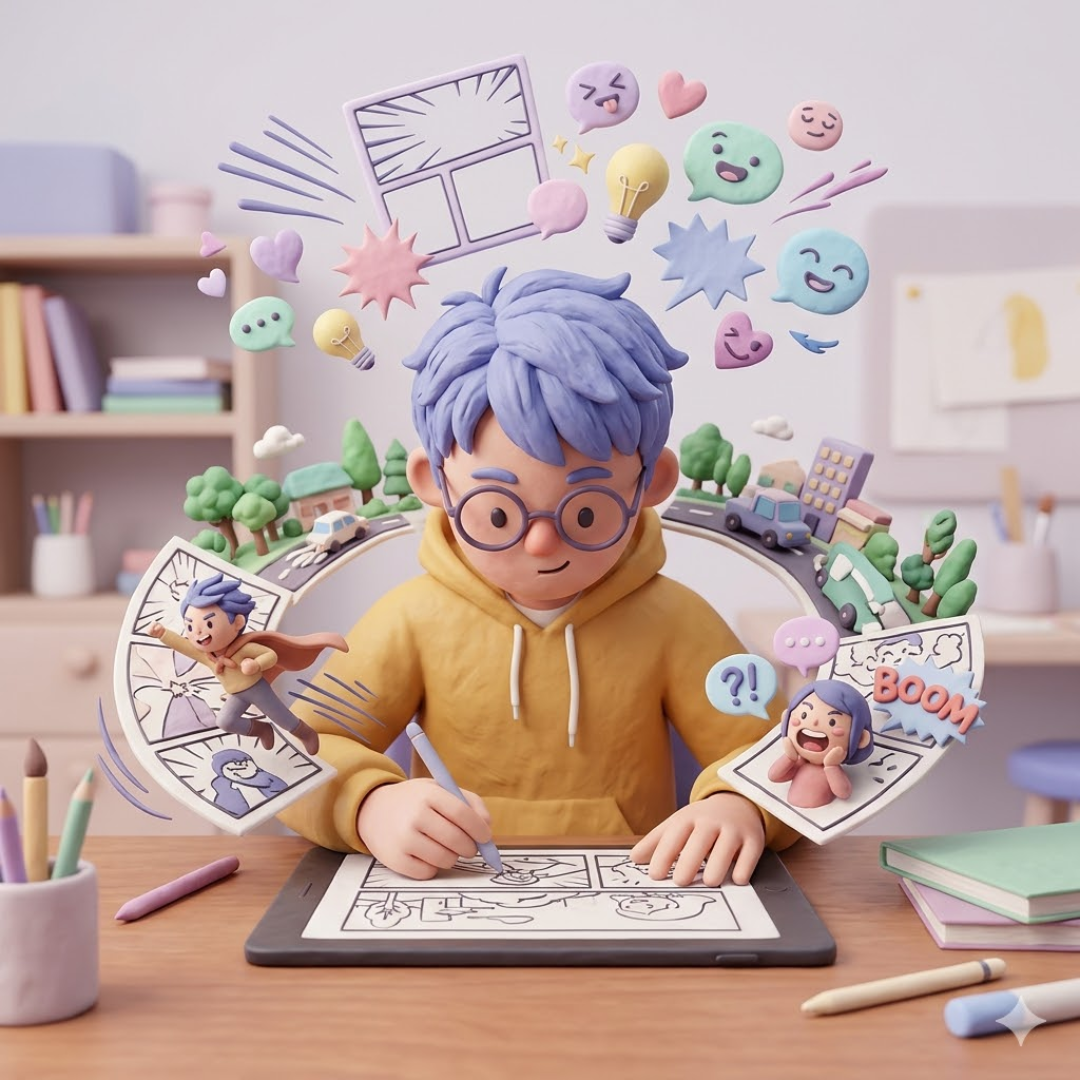
Why Manga and Comic Storytelling is a Powerful Skill for Creative Minds
In a world overflowing with information, the stories that stay with us are the ones we can see. From graphic novels and webcomics to animated series and gaming narratives, visual storytelling has become one of the most powerful ways to communicate ideas.
Manga and comics are not just entertainment—they are a creative language where art, imagination, and storytelling come together. For young creators, learning this craft opens doors to creativity, media careers, and new ways of expressing ideas.
Understanding the Art Behind Manga and Comics
At first glance, comics might seem simple—just drawings with speech bubbles. But behind every comic page lies a thoughtful process involving story structure, visual rhythm, character design, and emotional storytelling.
Comic creation is a unique art form called sequential storytelling, where images arranged in panels guide the reader through a narrative. The layout, pacing, and transitions between panels help control how a story unfolds and how emotions are conveyed.
Similarly, manga—originating from Japan—has its own distinctive storytelling style, often focusing on expressive characters, dramatic panel layouts, and immersive worlds.
When students explore this medium, they learn that every frame matters.
Turning Imagination into Visual Worlds
Creating a comic or manga story starts with imagination. But imagination alone is not enough—creators must transform ideas into structured stories.
This involves several key steps:
Character creation: Designing memorable characters with unique personalities and visual traits
Story development: Building plots, conflicts, and emotional arcs
Panel composition: Arranging scenes so readers naturally follow the narrative
Visual expression: Using poses, backgrounds, and expressions to communicate emotion
These elements help creators bring stories to life in a format where visuals and words work together to guide the reader’s experience.
Why Visual Storytelling is a Valuable Skill
In today’s digital-first world, visual communication is everywhere—social media, advertising, games, films, and online content. Learning comic storytelling helps students develop skills that go far beyond drawing.
Young creators gain:
Creative thinking through story development
Visual communication skills that simplify complex ideas
Design awareness through layout and composition
Narrative skills that strengthen writing and storytelling
These abilities are highly valuable in creative industries such as animation, filmmaking, graphic design, digital media, and game development.
From Sketches to Storyboards
A comic page rarely appears perfectly in the first attempt. The process usually begins with rough sketches and storyboards.
Storyboards allow creators to visualize how a scene flows from one panel to the next. They help experiment with camera angles, action sequences, and pacing before the final artwork is created.
Professional creators often follow a structured process:
Idea brainstorming
Script writing
Thumbnail sketches
Detailed artwork
Inking and coloring
This step-by-step journey helps transform a simple idea into a polished visual narrative.
A Creative Playground for Young Minds
For students, manga and comic creation can be an exciting gateway into creative media. Unlike traditional storytelling, comics allow them to experiment with visuals, emotions, and imaginative worlds.
A single comic page might feature:
futuristic cities
magical creatures
humorous everyday situations
thrilling adventures
The possibilities are endless, and each creator brings their own style and voice to the story.
The Rise of Comics in the Digital Era
The digital age has expanded opportunities for comic creators. Online platforms, digital drawing tools, and webcomic communities have made it easier than ever to share stories with a global audience.
Many successful creators today began by posting their stories online and gradually building a fan base.
This shift has transformed comics into a modern storytelling medium that blends art, technology, and media.
Encouraging Creativity Through Comic Storytelling
Learning the art of manga and comic storytelling encourages students to think visually, creatively, and strategically.
It teaches them how to:
turn ideas into stories
express emotions through visuals
design characters and environments
communicate narratives in a unique format
Most importantly, it allows young minds to discover their creative voice.
Manga and comics prove that storytelling doesn’t always need long paragraphs—sometimes a few carefully crafted panels can convey powerful emotions and unforgettable stories.
For students interested in art, media, and storytelling, learning comic creation is more than a hobby. It is a pathway to creativity, communication, and innovation in the world of visual media.
The next great story might not be written in a book—it might be drawn in panels.